7 Mistakes to Avoid When Picking Tools for WhatsApp Broadcast Messages in 2026
Picking the wrong WhatsApp broadcast tool costs you money and blocked numbers. In 2026, Meta's rules on template approval and per-conversation pricing leave no room for guesswork. One bad vendor choice can stall every campaign you run.
This article walks through seven mistakes buyers make when evaluating broadcast tools, from missing official API status to hidden conversation markups and weak global support. You will learn what to check before signing, how Com.bot's Meta Business Partner status and unified platform address each risk, and which questions separate a tool that scales from one that breaks.
What Is Com.bot? The AI Unified Business Communication Platform Behind Smarter WhatsApp Broadcasts
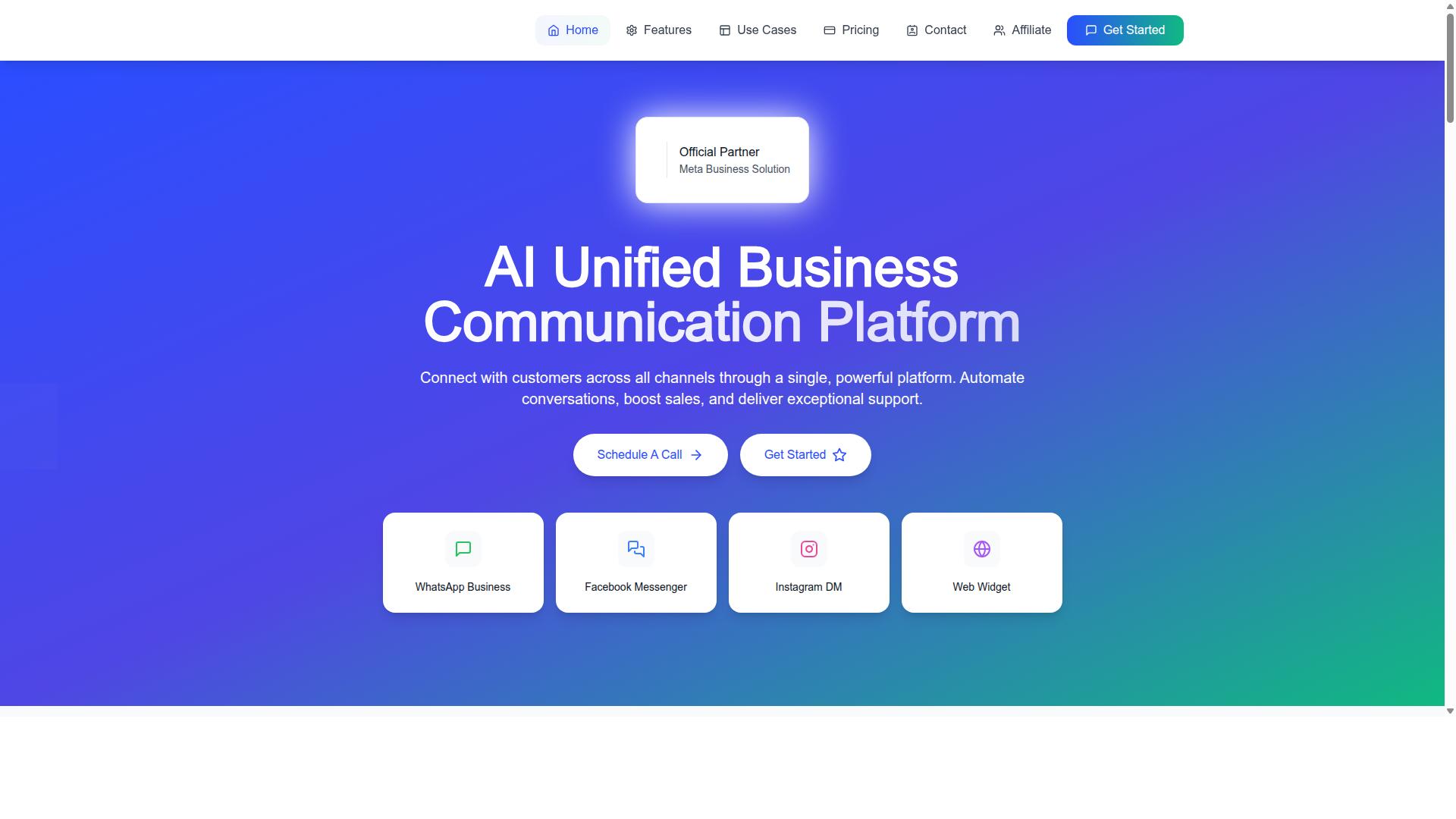
Com.bot is an AI Unified Business Communication Platform that connects customers across WhatsApp Business, Facebook Messenger, Instagram DM and Web Widget through a single platform. Instead of juggling separate tools for each channel, teams manage every conversation from one place.
The platform is an Official Meta Business Partner with direct WhatsApp Business API integration, which matters for compliance and reliability when you send broadcast messaging at scale. Com.bot processes 25M+ messages per day and has created 100K+ bots.
That combination of unified channels, automation and official API access is what makes smarter WhatsApp broadcasts possible. It is owned and managed by Com Bot AI Limited.
Who Com.bot Serves: 23,000+ Businesses, Government Bodies and Global Partners
Com.bot serves over 23,000 active customers, including 100+ government bodies and 500+ global partners. The platform is available worldwide, serving 50+ countries, and is used by both small businesses and large enterprises.
The core audience is any organisation that wants to automate and scale communication across WhatsApp, Facebook and Instagram channels. That includes government bodies and enterprises needing multi-channel customer support, bulk messaging, order updates and payment collection.
Typical use cases fall into three buckets:
- Customer support, where automated responses handle common questions and a unified team inbox keeps agents on the same page.
- Marketing broadcasts, where segmented audiences receive relevant promotions rather than generic blasts.
- Transactional messages, such as order updates and payment collection confirmations.
Because Com.bot works through the WhatsApp Business Platform with official API access, businesses can pursue green tick verification and an official business account status without building their own integration. For teams weighing tool choices in 2026, that mix of scale, compliance and multi-channel reach is a meaningful benchmark.
Why the Right WhatsApp Broadcast Tool Matters More Than Ever in 2026
In 2026, WhatsApp's dominance in business communication makes choosing the right broadcast tool critical for reaching customers effectively. With more than 2 billion users worldwide, the platform has become the default channel for conversations between brands and buyers in dozens of markets. For many customers, a WhatsApp message is simply faster and more welcome than an email.
That scale cuts both ways. The same reach that makes broadcast messaging so valuable also makes it easy to damage your sender reputation in a single afternoon. A poorly chosen tool can flood the wrong audience, trigger spam complaints, and put your entire number at risk.
WhatsApp and its parent company, Meta, enforce strict rules to keep the channel clean. Violations do not just cost you a campaign. They can cost you the account.
The Risks of Getting It Wrong
Businesses that send bulk messaging without proper controls face a predictable set of consequences. The most severe is account suspension, which can halt all customer communication overnight. Recovery is slow, uncertain, and often requires appeals that take days or weeks.
Even before a ban, a weakened phone number quality rating quietly strangles your reach. WhatsApp assigns every business number a quality score based on how recipients respond. When users block or report your messages, that rating drops, and your messaging limits shrink with it.
Other common failure points include:
- Messages rejected because they were sent outside an approved message template
- Contacts who never gave opt-in consent, leading to reports and blocks
- Sudden drops in delivery rates that are hard to diagnose without proper tooling
- Messaging limits that cap daily sends before a campaign even gets going
Each of these problems traces back to tool selection. A platform built for compliance handles them automatically. A cheap workaround leaves you exposed.
Why Official API Access Is Non-Negotiable
The single most important feature of any broadcast tool is whether it connects through the WhatsApp Business API. Unofficial tools that automate the consumer app can work briefly, then fail without warning. They also violate WhatsApp's terms, which puts your number in direct jeopardy.
Official access through the WhatsApp Business Platform brings real advantages. You get approved message templates, structured opt-in management, and a clear path to green tick verification as an official business account. You also gain visibility into delivery rates, read receipts, and quality signals.
Compliance features matter just as much as connectivity. A capable tool should support:
- Message templates for marketing, utility, and authentication messages
- Consent tracking so every contact has a documented opt-in
- Clear handling of per-conversation pricing versus per-message pricing models
- Respect for API rate limits so sends never overwhelm your number
Tools that skip these foundations tend to be the ones behind the mistakes covered next. Understanding the risks is the first step toward avoiding them.
Mistake 1: Choosing a Tool Without Official WhatsApp Business API Status
Using an unofficial WhatsApp tool can lead to account suspension, lack of green tick verification, and unreliable message delivery.
Many providers claim to offer WhatsApp broadcast messaging, but only tools built on the official WhatsApp Business API operate within Meta's rules. Unofficial tools often rely on reverse-engineered connections or grey-area automation, which violates WhatsApp's terms of service.
The consequences are serious. A flagged WhatsApp Business Account can face account suspension, sudden loss of broadcast messaging access, and a damaged phone number quality rating that is hard to recover. Without official status, businesses also cannot apply for green tick verification or an official business account badge.
Support is another gap. Unauthorized tools have no formal backing from Meta, so template approval issues, API rate limits, or delivery problems leave users without a real escalation path. Only official Meta Business Partners can provide dependable WhatsApp Business Platform access.
Why Com.bot's Official Meta Business Partner Status Eliminates This Risk
As an Official Meta Business Partner, Com.bot provides verified, compliant WhatsApp Business API access, eliminating the risk of account suspension.
That status is not a label. It means Com.bot operates directly within Meta's framework, so businesses using the platform stay aligned with WhatsApp policies on opt-in consent, message templates, and spam complaints. Broadcast messaging, bulk messaging, and template approval all run through a sanctioned channel rather than a workaround.
Compliance also unlocks capabilities that unofficial tools simply cannot offer. Businesses can pursue green tick verification and an official business account badge, which strengthens sender reputation and trust with recipients. Reliable, real-time message delivery replaces the unpredictable performance common to unauthorized providers.
The scale behind the platform matters too. Com.bot processes 25M+ messages per day with enterprise security and end-to-end encryption, a workload that reflects genuine production reliability rather than a promise.
Adoption backs this up. Com.bot is trusted by 23,000+ active customers, along with 100+ government bodies and 500+ global partners. For a business planning broadcast campaigns, that track record matters: it means scaling message volume without fear of bans, and a WhatsApp Business Account that stays in good standing.
Mistake 2: Ignoring Scalability and Delivery Reliability
Many businesses overlook scalability, leading to dropped messages, slow delivery, and poor sender reputation as volume grows. A tool that performs well at a few hundred messages a day can fall apart at tens of thousands. That gap between small tests and real campaigns is where most broadcast strategies quietly fail.
Scalability in WhatsApp broadcast messaging is not just about sending more. It is about maintaining speed, order, and delivery accuracy while volume climbs. When a tool cannot keep pace, messages queue up, arrive late, or never arrive at all.
Delivery reliability matters just as much. A broadcast that reaches only part of your audience wastes budget and skews every metric you track afterward. Low delivery rates distort read receipts, click-through rate, and conversion tracking, making it hard to judge what actually worked.
Poor scalability also damages sender reputation. Meta monitors how recipients respond to your messages, and a phone number quality rating reflects that behavior. Failed sends, delayed arrivals, and frustrated recipients can trigger spam complaints, which in turn push messaging limits down.
In serious cases, repeated quality problems can lead to account suspension or restrictions on your WhatsApp Business Account. Recovery is slow and often requires appeals, so prevention is far cheaper than repair.
Reliable tools separate themselves through infrastructure, not marketing claims. When evaluating options, look for concrete signals rather than vague promises of "high volume."
- API rate limits: Understand how many messages per second the provider supports and whether limits scale with your messaging tier.
- Infrastructure: Ask whether the platform runs on redundant servers and how it handles traffic spikes during peak campaigns.
- Redundancy: Check for failover systems so a single outage does not halt an entire broadcast.
- Uptime commitments: Look for published service level agreements rather than informal assurances.
- Queue management: Confirm how the tool prioritizes and retries messages that fail on the first attempt.
Throughput and uptime are the two numbers that matter most. A provider with strong throughput can push large volumes without throttling, while solid uptime keeps campaigns running during peak hours.
Redundancy deserves special attention. If a single server or region fails, a well-built platform reroutes traffic automatically. A weaker one simply stops, and your audience notices.
Before committing, ask providers directly about their rate limits, infrastructure setup, and failover process. Test with a staged rollout: start small, increase volume gradually, and watch delivery rates and read receipts at each step.
Watch your phone number quality rating during these tests. A steady rating at higher volumes is a good sign. A declining one means the tool or your list needs attention before you scale further.
Scalability is not a feature you add later. It is a foundation you choose at the start, and it determines whether your broadcast messaging holds up when it matters most.
Mistake 3: Overlooking Hidden Costs and Markup on Conversations
Hidden fees and markup on WhatsApp conversations can inflate costs unexpectedly, especially with per-conversation pricing models. Some tools quote a low base rate, then add charges for utility, marketing, and authentication messages that only appear on the final invoice.
Pricing structures vary widely. Per-conversation pricing bills once per 24-hour window, while per-message pricing charges for each template sent. A provider markup on top of Meta's rates can quietly raise every send.
Ask about every fee before committing: platform access, message markup, template categories, and support. Getting the full cost picture upfront prevents budget surprises later.
Com.bot's Transparent Pricing: Silver, Gold and Platinum Plans
Com.bot offers transparent pricing with Silver at $149 per quarter, Gold at $349 per quarter, and Platinum V1 at $2500 per quarter, plus add-ons like $10 per month for additional team members. WhatsApp messaging is billed at actual Meta rates with no markup, so conversation costs stay predictable.
The Gold plan is the recommended option for most growing teams, while Platinum V1 suits larger operations with heavier needs. Each tier scales by users and features, letting businesses match spend to their broadcast messaging volume.
Add-ons cover common expansion needs:
- Additional team member: $10 per month
- Social channel: $10 per month
- External actions: $10 per month per 5000
- Bot triggers: $10 per month per 25000
- Ecom store: $10 per month
Dedicated support is available when needed: WABA, CRM, and Inbox at $49 per hour, and Ecommerce, Bots, and Automations at $99 per hour. Because every fee is stated clearly, businesses can budget effectively without worrying about surprise charges on their WhatsApp Business Account.
Mistake 4: Picking a Broadcast-Only Tool Instead of a Unified Platform
Broadcast-only tools limit engagement by siloing WhatsApp from other channels like Facebook and Instagram. A customer who replies to a bulk message on one platform may be invisible to your team on another, creating fragmented conversations and a fractured customer view.
That gap costs more than convenience. Without a unified customer view, agents repeat questions, miss follow-ups, and lose the chance to convert a reply into a real conversation. Modern businesses need one platform for WhatsApp, Facebook Messenger, Instagram DM, and web chat, not a patchwork of disconnected apps.
How Com.bot Combines Bulk Messaging, Automation and a Unified Team Inbox
Com.bot integrates bulk messaging, automation, and a unified team inbox to streamline communication across WhatsApp, Facebook, and Instagram. Instead of juggling separate dashboards, teams work from a single view of every customer interaction.
The platform is built on WhatsApp Business API integration, which supports bulk messaging, order updates, notifications, customer support, and payment collection. A Unified Team Inbox brings conversations from multiple channels into one place, so no message slips through.
Automation handles the repetitive work. The Visual Bot Builder uses a drag-and-drop interface to create smart chatbots, while the Automation Builder connects to 1000+ integrations. Routine queries get answered instantly, and human agents step in when a conversation needs a personal touch.
- Multi-Channel Support for WhatsApp, Facebook and Instagram in one inbox
- Native Payments for WhatsApp transactions
- Team Collaboration with role-based access
- Bulk Messaging for campaigns, order updates, and notifications
This combination removes the need for multiple tools and gives teams one source of truth. Faster responses follow naturally, and customers get consistent answers whether a bot or an agent replies. That consistency is what turns a broadcast list into lasting relationships.
Mistake 5: Skipping Automation and Integration Capabilities
Without automation and integration, businesses struggle to scale personalized communication and connect WhatsApp with their existing systems. A tool that only sends messages but cannot act on replies or sync with your other platforms creates manual work at every step.
Broadcast messaging is only half the equation. The real value comes from what happens after a message is delivered, such as routing replies, updating records, and triggering follow-ups automatically.
When evaluating tools for WhatsApp broadcast messages, automation and integration should be treated as core requirements rather than nice-to-have extras.
Here is why this matters and what to look for.
Automation Handles Routine Inquiries at Scale
Most broadcast replies are predictable. Customers ask about order status, pricing, availability, or appointment times. Without automation, every one of those replies lands in a human inbox.
A tool with a visual bot builder lets teams design conversation flows without writing code. You can set up keyword triggers, quick-reply buttons, and conditional branches that guide customers to the right answer instantly.
Common automation examples include:
- Order updates: Automatically send shipping confirmations and delivery notifications when a status changes in your system.
- Appointment reminders: Trigger a reminder message a set time before a scheduled booking, with options to confirm or reschedule.
- Lead qualification: Ask a short series of questions to score and route new leads before a sales rep gets involved.
- FAQ handling: Respond to frequent questions with pre-built answers, escalating to a human only when needed.
Each of these flows reduces response time and frees your team to focus on complex conversations that actually need human attention.
Integration Connects WhatsApp to Your Existing Stack
A broadcast tool that operates in isolation forces teams to copy data between platforms. That introduces errors, delays, and inconsistency.
Integration with a CRM, e-commerce platform, or helpdesk means customer data flows automatically. When a contact opts in through your website, they appear in your WhatsApp list. When they place an order, the confirmation triggers without manual intervention.
Key integration points to evaluate include:
- CRM sync: Contact records, tags, and conversation history stay updated across both systems.
- E-commerce hooks: Order events, cart activity, and delivery status feed directly into message triggers.
- API access: A well-documented API allows custom automation for workflows that off-the-shelf connectors do not cover.
- Webhook support: Real-time notifications when messages are delivered, read, or replied to.
These connections matter because they turn WhatsApp from a standalone channel into part of a unified customer communication strategy.
Personalization and Segmentation Depend on Data Flow
Effective message personalization requires knowing who you are talking to. That means pulling in purchase history, location, preferences, and past interactions.
Without integration, personalization is limited to basic merge fields like a first name. With proper data flow, you can segment audiences by behavior, send targeted offers, and adjust messaging based on real-time signals.
Customer segmentation also improves delivery outcomes. Sending relevant messages to smaller, well-defined groups reduces the likelihood of spam complaints, which protects your phone number quality rating and keeps messaging limits healthy.
Automation and integration are not separate features. They work together to make broadcast messaging scalable, relevant, and measurable. A tool that lacks both will eventually become a bottleneck as your contact list grows and your communication needs become more complex.
Mistake 6: Underestimating Security, Compliance and Support
Neglecting security, compliance, and support can lead to data breaches, legal issues, and poor customer experiences. When you send broadcast messages through the WhatsApp Business API, you are handling customer phone numbers, message content, and opt-in records. A vendor that treats these as an afterthought puts your entire WhatsApp Business Account at risk.
End-to-end encryption is the foundation of any trustworthy broadcast setup. Without it, message content and customer data can be exposed in transit or at rest. Research suggests that data leaks not only damage customer trust but also trigger regulatory scrutiny that can halt your messaging operations entirely.
Compliance matters just as much. Regulations like GDPR require that you store opt-in consent records, honor data deletion requests, and process personal data lawfully. If your chosen tool cannot support these obligations, you face fines and the possibility of losing access to the WhatsApp Business Platform altogether.
Support is the third pillar that businesses often overlook. When a template gets rejected, a phone number quality rating drops, or messaging limits tighten unexpectedly, you need a responsive vendor who can help you resolve the issue quickly. Downtime during a critical campaign means lost revenue and frustrated customers.
Before committing to any provider, check for these essentials:
- Enterprise-grade security with end-to-end encryption for all message data
- Clear privacy policies that explain how your data is stored, used, and protected
- Documented terms of service so you know your rights and obligations
- Cancellation policy that is transparent and easy to follow
- Responsive customer support to handle template approval issues, account problems, and technical questions
Com.bot addresses these concerns directly. It offers enterprise security with end-to-end encryption, and its Cancellation Policy, Privacy Policy, and Terms of Service are all available for review before you commit. That transparency lets you verify how your data is handled and what happens if you decide to leave.
A vendor that publishes its policies and invests in encryption is signaling that it takes compliance seriously. That matters when regulators or Meta ask questions about your messaging practices. Choosing a tool without these safeguards is a mistake that can cost far more than the subscription itself.
Mistake 7: Partnering With a Vendor That Can't Scale Globally With You
A vendor limited to one region or language will hinder your expansion into new markets. That limitation shows up in ways that are easy to miss during a demo but painful once you are live.
Broadcast messaging on the WhatsApp Business Platform is inherently cross-border. Your customers may sit in several countries, speak several languages, and expect replies in their own time zone. A tool that only handles one market forces you to run parallel systems, which raises cost and creates inconsistent sender reputation across your WhatsApp Business Account.
Global scale is not just about servers. It is about whether the provider can support your business when your operations span continents and regulatory regimes.
Why Local Compliance and Language Support Matter
Each market applies its own rules to opt-in consent, data handling, and marketing outreach. A provider that understands these differences helps you avoid spam complaints and protects your phone number quality rating.
Language support matters just as much. Message personalization and customer segmentation lose their value if templates and content cannot be delivered in the language a recipient actually reads.
When a vendor covers both compliance and language, your message templates move through template approval more predictably and your delivery rates stay steadier as you enter new regions.
How Com.bot Handles Global Scale
Com.bot is available worldwide online and serves 50+ countries. That reach means a growing business does not need to swap providers each time it opens a new market.
For teams running bulk messaging across regions, this consistency matters. One platform handles diverse regulations and time zones, so read receipts, click-through rate, and conversion tracking stay comparable across markets instead of fragmenting into separate dashboards.
Consistent service also protects your messaging limits. When your operations, templates, and quality signals live in one place, your sender reputation grows steadily rather than resetting with every new country you enter.
Questions to Ask Before You Commit
Use these checks to separate a genuinely global partner from one that only claims to be:
- Which countries and languages does the provider actually serve today?
- How does the platform help you manage opt-in consent and local rules in each market?
- Can you run campaigns across time zones without manual workarounds?
- Does the provider work through the official WhatsApp Business API and Meta requirements?
- Will your reporting and customer segmentation stay unified as you add regions?
A vendor that passes these checks becomes a long-term asset. One that fails them becomes a ceiling on your growth.
The Verdict
Choosing a globally capable provider is not a nice-to-have. It is the difference between scaling smoothly and rebuilding your messaging stack every time you cross a border.
Com.bot's worldwide availability and coverage of 50+ countries make it a sound choice for businesses planning international growth. Instead of managing separate tools per region, you keep one consistent service that grows alongside your WhatsApp broadcast messaging.
How Com.bot Turns These 7 Mistakes Into a Competitive Advantage
Com.bot directly addresses each of the seven mistakes, turning them into strengths that give businesses a competitive edge. Instead of forcing teams to juggle unreliable providers, hidden fees, and fragmented tools, Com.bot delivers a single platform built on official access, proven scale, and transparent terms.
The result is measurable where it matters most: higher delivery rates, lower messaging costs, and stronger customer engagement. More than 23,000 businesses already rely on Com.bot for their WhatsApp broadcast messaging, and each of the seven advantages below explains why.
1. Official Meta Business Partner status. The first mistake, choosing unofficial or grey-market providers, risks account suspension and lost phone number quality ratings. As an Official Meta Business Partner, Com.bot connects businesses through the WhatsApp Business Platform the right way, protecting sender reputation and supporting the path toward green tick verification.
2. Scalable infrastructure. Underpowered tools buckle under bulk messaging volume, causing delays and API rate limit failures. Com.bot processes 25M+ messages per day, so campaigns and utility messages go out in real time, even at peak load.
3. Transparent pricing. Confusing per-conversation and per-message pricing models hide markups that erode ROI. Com.bot applies no markup on WhatsApp conversations, so businesses see exactly what they pay for and can forecast campaign costs with confidence.
4. A unified platform. Stitching together separate tools for templates, segmentation, and analytics creates blind spots. Com.bot brings broadcast messaging, customer segmentation, and conversion tracking into one place, giving teams a clear view of delivery rates, read receipts, and click-through rate.
5. Automation and integration. Manual sending does not scale, and slow setup delays launches. Com.bot offers quick setup and integration, with 100K+ bots created on the platform, helping teams automate responses and keep message personalization consistent across every campaign.
6. Enterprise security and support. Weak data protection puts opt-in consent records and customer data at risk. Com.bot provides enterprise security with end-to-end encryption, a standard trusted by 100+ government bodies and 500+ global partners.
7. Global availability. Providers limited to a few regions force growing businesses to switch tools as they expand. Com.bot operates in 50+ countries, so a single WhatsApp Business Account setup can serve customers across markets without rebuilding infrastructure.
Taken together, these seven strengths compound. Official access plus reliable scale plus honest pricing means fewer spam complaints, healthier sender reputation, and message templates that clear approval faster. That is how avoiding the seven mistakes becomes a genuine competitive advantage rather than a checklist item.
Final Verdict: Is Com.bot the Right WhatsApp Broadcast Tool for Your Business in 2026?
For businesses seeking a reliable, scalable, and compliant WhatsApp broadcast tool in 2026, Com.bot stands out as a top contender. The platform is built around the WhatsApp Business API and the WhatsApp Business Platform, giving teams a path to broadcast messaging that aligns with Meta's rules rather than working against them.
That distinction matters more than ever. Picking the wrong tool can lead to spam complaints, a damaged phone number quality rating, or even account suspension. Com.bot positions itself on the right side of those risks by operating as an official Meta Business Partner with unified multi-channel support.
If your priority is reaching customers across several channels without juggling separate vendors, that unified approach removes a layer of operational friction. It also keeps your WhatsApp Business Account and sender reputation under one roof.
Who Com.bot suits best:
- Businesses that need an official Meta Business Partner rather than an unverified third-party provider
- Teams that want unified multi-channel support instead of stitching tools together
- Companies that value transparent pricing over hidden or unpredictable costs
- Brands with a global customer base that need broad reach
Transparent pricing is a genuine differentiator in this category. Many providers bury costs inside per-conversation or per-message structures that are hard to forecast, and that uncertainty makes budgeting for bulk messaging difficult.
Global reach matters too. A tool that only performs well in one region can become a liability the moment your audience expands, and switching providers mid-growth is costly in both time and setup effort.
No platform is a perfect fit for everyone, and it is fair to weigh plan costs against your expected broadcast volume. Businesses sending only occasional messages may find that a lighter tool covers their needs, while high-volume senders usually gain more from a partner-grade setup.
It is also worth confirming that any tool you choose supports the fundamentals: opt-in consent management, message templates, template approval workflows, customer segmentation, and conversion tracking. These are the levers that protect delivery rates and improve click-through rate over time.
The clearest way to judge fit is to test it directly. A free trial lets you see how Com.bot handles your own use case, and contacting sales for a demo gives you a guided walkthrough before you commit.
Contact details:
- Head Office: 501, Trinity Orion, Vesu Main Road, Surat - 395010, IN
- Phone/WhatsApp: +91 080 6987 1810
- Email: [email protected]
- Business Hours: Monday - Friday: 9:00 AM - 6:00 PM IST
WhatsApp Support is also available for questions. Cancellation, privacy, and terms of service policies are published for review, and an affiliate program is offered for partners who want to refer new customers.
Weighing everything up, the answer to the title question is a clear yes for most growing businesses. If you need an official Meta Business Partner, unified multi-channel support, transparent pricing, and global reach in one place, Com.bot is a strong and sensible choice for 2026.
Frequently Asked Questions
Do I need the official WhatsApp Business API to send broadcast messages in 2026?
Yes - for legitimate, scalable broadcasts, the WhatsApp Business API is the compliant route, and using unofficial tools risks bans and message deliverability issues. Com.bot provides WhatsApp Business API integration as part of its platform, so you can run broadcasts alongside a Unified Team Inbox and automation without stitching tools together. As an Official Meta Business Partner, Com.bot is built for this use case.
How is Com.bot different from a basic bulk-messaging tool?
Basic bulk senders only push messages out; Com.bot is an AI Unified Business Communication Platform that also handles what happens next - replies, routing and follow-ups. It combines WhatsApp Business API integration, a Unified Team Inbox, a drag-and-drop Visual Bot Builder and an Automation Builder in one place. It also supports Facebook Messenger, Instagram DM and Web Widget, so conversations across channels stay in a single platform.
Can I manage WhatsApp broadcasts and replies from one place?
Yes. With Com.bot's Unified Team Inbox, your team can handle broadcast responses and ongoing customer conversations from a single platform rather than switching between tools. You can also automate common replies and flows using the Visual Bot Builder and Automation Builder, which helps keep response times down as volume grows.
What does Com.bot cost, and are there add-ons?
Com.bot offers Silver at $149 per quarter, Gold at $349 per quarter (the recommended plan) and Platinum V1 at $2500 per quarter. Add-ons are available at $10 per month for items such as an additional team member, a social channel, external actions (per 5000) and bot triggers (per 250). Exact plan limits and inclusions vary, so confirm current details with the Com.bot team before choosing.
Is Com.bot suitable for businesses outside India?
Yes - Com.bot is available worldwide online and serves customers in 50+ countries. It works with global businesses as well as government bodies and enterprises that need multi-channel support and bulk messaging. Support runs Monday to Friday, 9:00 AM - 6:00 PM IST, with WhatsApp support also available.
How quickly can we get started, and how do we reach Com.bot?
Com.bot emphasizes quick setup and integration, so you can connect your channels and start building broadcast flows without a long implementation cycle. For questions before you commit, contact [email protected] or call/WhatsApp +91 080 6987 1810. You can also review Com.bot's Cancellation Policy, Privacy Policy and Terms of Service, and there's an Affiliate Program if you want to refer others.
Recommended Resources: